
Four hundred and twenty million. Put another way, that is roughly three out of every ten people in India who have now had their blood pressure and blood sugar checked under a central government scheme.
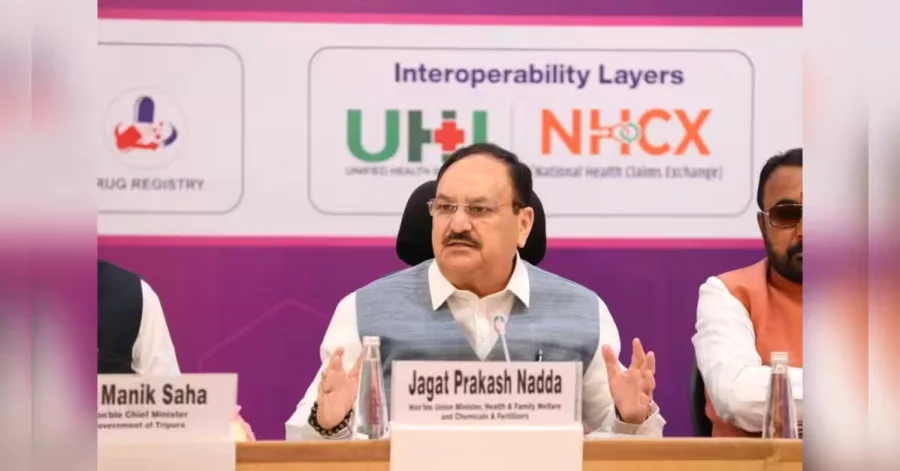
Union Health Minister J.P. Nadda disclosed the figure while addressing the World Congress of Gastroenterology (WCOG 2026), where he called screening for non-communicable diseases — NCDs — "an important part of preventive healthcare."
It is a headline number built out of millions of small, unglamorous encounters: a cuff tightened around an arm, a finger pricked, a reading noted in a register. And it is the clearest signal yet of how far India has pushed routine screening into its health system.
A Number Built on Millions of Ordinary Clinic Visits
NCDs — hypertension, diabetes, cardiovascular disease and cancers — are the conditions that quietly account for the largest share of deaths worldwide, according to the World Health Organization. They rarely announce themselves. Hypertension is often symptomless until it damages the heart, kidneys or eyes. Type 2 diabetes can develop for years before a routine test catches it.
That is precisely why screening, and not treatment alone, sits at the centre of NCD policy. A reading taken today at a health centre can prevent a stroke five years from now.
Nadda's emphasis at WCOG 2026 places the screening drive in that preventive frame rather than presenting it as a treatment statistic.
Why '420 Million' Is a Different Kind of Health Statistic
India's health data is usually discussed in terms of outcomes — cases, mortality, immunisation coverage. Screening numbers work differently. They measure how many people were reached before an illness became expensive, disabling or fatal.
At roughly 420 million, the reach implied is not a pilot or a district-level experiment. It is population-scale.
The caveat is equally important: screening tells you who was tested, not who was treated. A high screening figure without matching follow-up data is an incomplete picture, and public health researchers have consistently flagged that gap in NCD programmes.
What Was Said — and What Was Not Detailed
The available statement is specific on the number and the context, and silent on much else. It does not name the central scheme, specify the period over which the 420 million were screened, or provide state-wise or age-wise breakdowns.
It also does not indicate how many of those screened were diagnosed with hypertension or diabetes, how many were referred onward, or how many remained in care after referral.
Those are not minor omissions — they are the difference between a screening event and a functioning NCD programme. Until those figures are released, the number should be read as a measure of reach, not of health outcome.
What This Means for an Ordinary Household
For a family in a tier-2 town or a village, the practical implication is straightforward: a blood pressure and blood sugar check is now part of routine contact with the public health system, not a special request.
That matters most for people in their thirties and forties, the group where hypertension and diabetes are rising fastest and where symptoms are least likely to trigger a doctor's visit. A free, walk-in reading at a nearby health centre changes the odds for exactly that group.
For older Indians already managing one of these conditions, the value lies elsewhere — in re-testing, in tracking whether medication is working, and in catching complications early.
The Government's Framing: Prevention Before Prescription
Nadda's phrasing at the gastroenterology congress was deliberate. By describing NCD screening as preventive healthcare, he positioned the programme alongside immunisation and maternal health — interventions that are judged by how many people are reached, not by how many fall ill.
That framing also fits the economics of Indian healthcare. Detecting hypertension or diabetes early is vastly cheaper for a household than treating a heart attack, a stroke or advanced kidney disease later.
Reading Between the Lines of a Headline Number
Large cumulative figures carry a built-in ambiguity. "420 million screened" could mean 420 million distinct individuals, or a smaller number of people screened multiple times across annual cycles. The statement, as available, does not clarify this.
Similarly, a single national number can mask wide variation — between states, between urban and rural districts, and between age groups. Some regions run screening drives aggressively; others struggle with staffing and supply of test strips.
None of this undermines the figure. It simply means the figure is the beginning of the story, not the end of it.
What Is Confirmed, and What Is Still Open
Confirmed: Nadda stated that 420 million people have been screened for hypertension and diabetes under a central scheme, and described NCD screening as an important part of preventive healthcare, speaking at WCOG 2026.
Still open: the scheme's name, the screening period, the number of unique individuals, diagnosis and referral rates, and state-level data. Any claims on those points should be treated as unverified until official figures are published.
Where India's NCD Battle Gets Hardest
Screening is the easy half. The hard half begins the moment a reading comes back abnormal.
Patients must be counselled, started on medication where needed, and followed up for years — often for life. Drop-off at this stage is the most commonly cited weakness in large NCD programmes worldwide, and India's scale makes that challenge sharper than most.
There is also the question of health-system capacity: trained staff, uninterrupted drug supply, and reliable equipment for repeat testing. A screening number can grow faster than the system's ability to hold on to the people it finds.
The Wider Pattern India Cannot Ignore
India's disease burden has been shifting for two decades — away from infectious disease and towards chronic, lifestyle-linked conditions. Rising urbanisation, sedentary work, processed food and tobacco use have accelerated that shift.
Screening at this scale is a recognition of the shift, not a response to a sudden crisis. Viewed alongside national efforts on tobacco control, salt reduction and diabetes care, it forms part of a longer preventive strategy.
What You Can Do With This Information
If you are over 30 and have not had a blood pressure and blood sugar check in the past year, this is a reasonable prompt to get one — at a government health centre, a camp, or a private lab.
If you already have a diagnosis, keep your follow-up appointments and repeat tests on schedule. Screening data is only useful if the person screened returns for the next step.
And if you read a state-wise or scheme-specific figure circulating on social media, verify it against an official health ministry release before sharing it. The headline number is confirmed; the details around it are not.
What Could Happen Next
The likely next development is a more detailed official release — scheme-wise data, state performance, and possibly an update on follow-up treatment rates. Health ministry statements at international forums are often followed by programme reviews.
What observers will watch for is whether the conversation moves from how many were screened to how many stayed in care. That second number will decide whether this is remembered as a landmark preventive push or an unfinished one.
Our Take
The 420 million figure deserves attention because it reframes India's health conversation around prevention rather than crisis response. It is also a reminder that scale is not the same as success.
The real test lies downstream — in diagnosis, medication, follow-up and outcomes. Until those numbers are public, the honest reading is this: India has built a screening machine of serious size, and the work of making it count has only just begun.
Frequently Asked Questions
How many people have been screened for hypertension and diabetes in India?
Union Health Minister J.P. Nadda said 420 million people have been screened for hypertension and diabetes under a central scheme. That is roughly three in every ten Indians, based on current population estimates.
What is NCD screening?
NCD screening means testing people for non-communicable diseases — mainly hypertension (high blood pressure) and diabetes — before symptoms appear. It typically involves a blood pressure reading and a blood sugar test, and is designed to catch conditions early when they are easier and cheaper to manage.
Where did Nadda make this statement?
He made the remarks while addressing the World Congress of Gastroenterology (WCOG 2026), where he described screening for non-communicable diseases as an important part of preventive healthcare.
Does being screened mean a person is treated for hypertension or diabetes?
No. Screening only identifies who may have a condition. Treatment and follow-up are separate steps, and the available statement does not include diagnosis, referral or treatment figures. That data gap is one of the main things public health experts will look for next.