
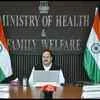

India's tuberculosis numbers are moving in the direction the country has chased for years — and the Union Health Minister wants that read as the final stretch, not the finish line. JP Nadda said India is now "very close" to its goal of eliminating TB, citing a 21 per cent fall in incidence against a 12 per cent decline globally, and treatment coverage of 92 per cent against 78 per cent worldwide.
His message to the health system was blunt: one "last push."
A 21% Fall Against the World's 12%: What the Two Numbers Actually Mean
Incidence measures how many new TB cases appear in a population each year. A faster fall there means fewer people are being infected or falling ill in the first place — the metric that ultimately decides whether an epidemic is shrinking.
Treatment coverage measures the share of estimated patients who are actually on treatment. At 92 per cent, India's figure suggests that most people who develop TB are being reached by the system.
Taken together, the two numbers describe a programme that is diagnosing more and losing fewer patients — the combination public health officials look for before talking about elimination.
Why 92% Treatment Coverage Changes the Story on the Ground
For a patient, coverage is not an abstraction. It is the difference between a persistent cough being dismissed and being tested, between a full six-month course and a course abandoned after two months when symptoms fade.
Incomplete treatment is one of the main routes to drug-resistant TB, which is far harder and costlier to cure. A coverage figure in the low 90s signals that fewer patients are slipping out of the treatment chain mid-way.
It does not mean the chain is flawless. Eight per cent of a very large number is still a very large number of people.
How India's TB Fight Reached This Point
India's TB programme has been one of the world's largest public health efforts for decades, built around free diagnosis, free treatment and, more recently, nutritional support for patients.
The country has publicly committed to ending TB ahead of the global Sustainable Development Goal timeline — a deadline the government has set as a national target rather than an inherited one.
The pandemic years disrupted case detection and treatment across the world, and India's TB notifications dipped during that period before recovering. Much of the recent improvement is a climb back from that disruption as much as a leap forward.
Who Is Still Being Missed
TB has always been a disease of poverty. It concentrates in crowded housing, among malnourished populations, and in households where a daily wage is lost with every clinic visit.
Stigma keeps many patients from seeking care early, particularly women, who may fear being labelled or isolated. Children often go undiagnosed because their symptoms are atypical and testing is harder.
Progress on national averages can coexist with stubborn local gaps. Districts with weaker health infrastructure typically lag well behind the headline figures.
What the Health Ministry and Nadda Are Saying Now
According to the statement, the comparison is deliberately international: India's 21 per cent decline is being measured against a 12 per cent global decline, and its 92 per cent treatment coverage against 78 per cent globally.
The minister's framing places India ahead of the global curve on both indicators, while making clear the government does not consider the job finished.
That call for a "last push" is directed as much at state health machinery and frontline workers as at the public.
Reading the Numbers Carefully: What the Headline Figures Don't Capture
The statement does not specify the time period over which the 21 per cent decline was recorded, nor the baseline year against which the global comparison was drawn. That matters: a decline measured over a decade tells a different story from one measured over three years.
Treatment coverage is also an estimate. It depends on how many total cases are projected for the population — a figure that is modelled, not counted directly.
Neither caveat undercuts the direction of travel. Both are reasons to read the numbers as encouraging rather than conclusive.
Confirmed Facts vs What Remains Unclear
Confirmed: Nadda said India is very close to its TB elimination goal; TB incidence has fallen 21 per cent against a 12 per cent global decline; treatment coverage stands at 92 per cent against 78 per cent globally; and he called for a final push.
Unclear: The exact reporting period for these figures, the year-on-year consistency of the trend, and how the gains are distributed across states and districts. No new deadline for elimination was announced in the statement.
The Risks That Could Slow the Final Push
The biggest threat is drug-resistant TB, which spreads when treatment is interrupted and can undo years of gains if it grows unchecked. Detecting it early requires laboratory capacity that is unevenly distributed.
Funding is another pressure point. Programmes that rely on sustained public spending — nutrition support, active case-finding campaigns, screening in high-risk groups — are the first to slow when budgets tighten.
There is also a definitional question. In public health terms, elimination is usually described as reducing cases to below one per million people per year. That is a far higher bar than a falling caseload, and it is the bar India has set for itself.
Why This Is Bigger Than One Country's Health Milestone
India has historically accounted for roughly a quarter of the world's TB cases, according to World Health Organization estimates. That single fact makes the country's trajectory a global variable.
Global TB targets have repeatedly slipped because progress in high-burden countries lagged. If India's decline holds, it changes the arithmetic for the entire global end-TB effort.
The wider pattern is also instructive: countries that scaled up diagnosis in primary care, rather than waiting for patients to arrive at hospitals, have moved fastest.
What This Means for Patients, Families and Policymakers
For patients, the practical message is unchanged and worth repeating: TB is curable, and diagnosis and treatment are available free at government health facilities. Stopping treatment early is the single most dangerous decision a patient can make.
Families should treat a cough lasting more than two weeks as a reason to get tested, not to wait. Those who have been in close contact with a confirmed patient should ask about screening.
For policymakers, the outstanding task is the last mile — reaching the undiagnosed, the dropouts and the drug-resistant cases that averages conceal. That work is slower, costlier and less visible than a national milestone.
What Happens Next in India's TB Elimination Push
The coming months will likely see intensified case-finding in high-burden districts, continued nutritional support, and pressure to bring private-sector diagnosis and treatment into the reporting system.
Independent verification will come annually through WHO's global TB report and the government's own programme data. Those documents, not announcements, will settle whether the 21 per cent decline is a durable trend.
Our Take
A 21 per cent decline against a 12 per cent global fall is a genuinely meaningful gap, and 92 per cent treatment coverage is a serious operational achievement for a country of India's size.
But "very close" is doing careful work in that sentence. India is close to its self-imposed deadline and clearly ahead of the global pace — it is not close to the technical threshold of elimination, where cases fall below one per million people a year.
Both things can be true, and reporting them honestly is what keeps a genuine public health milestone from becoming a slogan. The last push will be measured not in percentage points already gained, but in the patients still not on the list.
Frequently Asked Questions
What did JP Nadda say about TB elimination in India?
He said India is "very close" to achieving its goal of eliminating tuberculosis, and called for a "last push." He cited a 21 per cent decline in TB incidence compared with a 12 per cent global decline, and treatment coverage of 92 per cent against 78 per cent globally.
How much has India's TB incidence declined?
According to the figures cited by the health minister, India's TB incidence has fallen by 21 per cent, while the global decline over the comparable measure is 12 per cent. The statement did not specify the exact period covered by those figures.
What is India's TB treatment coverage compared with the world?
India's treatment coverage stands at 92 per cent, against a global figure of 78 per cent, as per the statement. This means a larger share of estimated TB patients in India are on treatment than the worldwide average.
Does this mean India has eliminated tuberculosis?
No. TB elimination, in public health terms, generally means reducing cases to below one per million people per year — a much higher bar than a falling caseload. India's progress is real and faster than the global average, but elimination is still ahead.