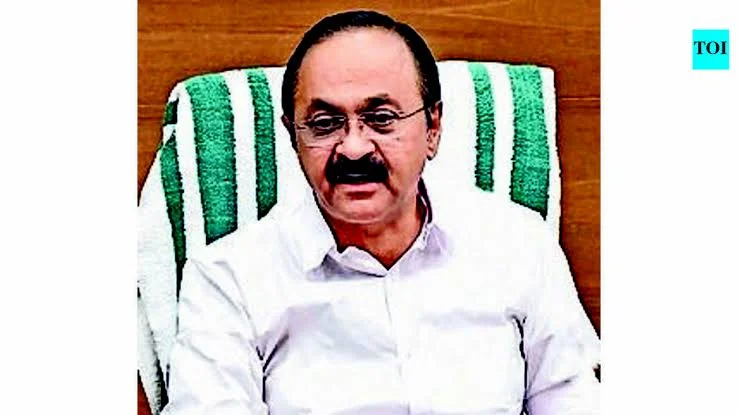

Kozhikode is set to get a 350-bed hospital built specifically for organ and tissue transplants — if a 30-month deadline announced by Kerala Chief Minister V D Satheesan holds. The proposed Keralam Institute of Organ and Tissue Transplant will have 10 operation theatres, and a separate skin disease hospital is planned on the same campus at a cost of Rs 35 crore.
For families who spend months on waiting lists, the announcement is less about buildings and more about distance — the gap between a diagnosis and a transplant, measured in kilometres and days.
Kozhikode's 350-Bed Transplant Institute: What the Chief Minister Announced
According to the Chief Minister's statement, the institute will be established in Kozhikode within 30 months. The complex is designed around 350 beds and 10 operation theatres — a scale that suggests a facility built for both transplant surgery and long post-operative care.
The skin disease hospital on the same campus is the second component, estimated at Rs 35 crore and described as fully equipped. Placing it alongside a transplant institute points to a shared-infrastructure model: common diagnostics, common sterilisation, common specialist pool.
Why a Dedicated Transplant Centre Carries Weight in Kerala
Transplant medicine is not general medicine. It depends on retrieval coordination, tissue matching, cold-chain transport and lifelong immunosuppression follow-up — functions that are easier to run inside a single dedicated facility than spread across departments.
A dedicated institute also concentrates scarce specialists: transplant surgeons, nephrologists, hepatologists, immunologists and trained transplant coordinators. In states where these teams are thin, patients often move between cities for different stages of the same treatment.
From Announcement to Deadline: The 30-Month Clock
The statement sets a duration, not a date. Thirty months from the day construction formally begins is a different timeline from thirty months from today — and no construction start date was announced.
Large public health projects typically move through site finalisation, land clearance, design approvals, tendering and funding allocation before the first pillar goes up. None of those milestones were disclosed in this announcement.
Who Stands to Gain — and Who Waits
The clearest beneficiaries are patients with end-stage organ failure and the families who care for them. A facility in Kozhikode would matter most to people in northern Kerala and neighbouring districts, for whom travel to distant transplant centres adds cost, lost wages and clinical risk.
Donor families are the second group. Retrieval depends on hospital-level coordination and rapid transport. A dedicated institute usually strengthens that chain, because organ retrieval becomes a routine protocol rather than an occasional effort.
What the Government Has Said — and What It Hasn't
The Chief Minister's announcement covers three things: the project, its location, and its 30-month timeline. Alongside it, the skin disease hospital and its Rs 35 crore cost.
Not covered in the statement: the total project cost for the transplant institute, the funding route, land ownership at the proposed site, the executing agency, staffing plans, or whether the facility will handle all organ types from the outset. Those details will decide whether the deadline is realistic.
Reading the Announcement: Deadline as Commitment Device
Public deadlines in infrastructure serve a purpose beyond scheduling. They allow citizens to hold governments to a date, and they force departments to sequence approvals instead of letting files circulate.
They also carry risk. When a deadline slips quietly, the cost is not only financial — it is the credibility of the next announcement.
Confirmed Facts and Open Questions
Confirmed from the announcement: the institute is proposed for Kozhikode; it is planned with 350 beds and 10 operation theatres; the target is 30 months; a skin disease hospital will be built on the same campus at Rs 35 crore.
Unclear: exact site, total budget, funding source, construction start date, phasing of the two facilities, and whether the transplant institute will be operational in full at the 30-month mark or commissioned in stages. No independent verification of preparatory work is available at this stage.
What a Dedicated Transplant Institute Actually Changes
A general hospital can perform a transplant. A dedicated institute is built around the parts of transplant care that general hospitals struggle to standardise — donor coordination, tissue typing laboratories, intensive care tuned for immunosuppressed patients, and structured long-term follow-up.
The distinction matters for outcomes. Survival after transplant is influenced as much by post-surgical management and drug adherence as by the surgery itself. A campus that keeps those functions together is better placed to track patients for years, not weeks.
Costs, Delays and the Risks That Usually Decide Such Projects
Three risks typically determine whether a project of this size stays on schedule: land and clearances, specialist recruitment, and recurring revenue for consumables and drugs, which often cost more over a decade than the building itself.
There is also a demand question. A 350-bed transplant-focused hospital needs a steady referral pipeline to stay fully utilised. If referral pathways across districts are not formalised, capacity can sit idle while patients continue to travel elsewhere.
None of this is an argument against the project. It is the standard list of things that decide whether a well-intentioned announcement becomes a working hospital.
Kerala's Health Push in a Wider Context
States across India have been expanding tertiary care capacity, particularly for super-specialty treatment that has historically pulled patients toward a handful of metro cities. Transplant care sits at the expensive end of that spectrum.
Building it closer to where patients live is one way to reduce the financial shock of catastrophic illness. Whether that model works depends less on the ribbon-cutting than on what happens in year three, when the equipment is installed and the specialists must be retained.
What Patients and Families Should Do Right Now
Nothing changes immediately for anyone currently on a transplant waiting list. For now, the practical advice is unchanged: stay registered with your treating hospital, keep donor coordination channels informed, and follow your current care plan.
If the project progresses, patients in and around Kozhikode should watch for formal announcements about referral pathways and empanelment — those, not the foundation stone, are what determine who actually gets treated there.
The Road Ahead: What to Watch Over the Next Two and a Half Years
Four developments will signal whether the 30-month target is credible: the identification of the site, the release of a detailed project cost, the award of construction tenders, and the sanction of specialist posts.
If those four appear on schedule, the deadline looks achievable. If the next public update is another deadline, that itself will be the story.
Our Take
A dedicated organ and tissue transplant institute in Kozhikode is a genuinely significant commitment for a state that carries a heavy burden of lifestyle-related organ disease. The plan to co-locate a skin disease hospital at Rs 35 crore suggests the government is thinking in terms of shared infrastructure rather than standalone showpieces — a sensible instinct.
But an announcement is a starting gun, not a finish line. The 30-month figure is now public, and that is to the government's credit: it invites scrutiny. The honest position for readers is neither celebration nor scepticism, but attention — to the site notice, the tender, the sanctioned posts. Those documents will tell the real story long before the hospital opens.
Frequently Asked Questions
What is the Keralam Institute of Organ and Tissue Transplant?
It is a proposed hospital dedicated to organ and tissue transplantation, announced for Kozhikode with 350 beds and 10 operation theatres, according to Chief Minister V D Satheesan.
When will the Kozhikode transplant hospital be ready?
The Chief Minister has set a timeline of 30 months. No construction start date has been announced, so the exact completion date remains open.
What is being built along with the transplant institute?
A fully equipped skin disease hospital will be constructed on the same campus at an estimated cost of Rs 35 crore, as per the announcement.
Will the new hospital reduce transplant waiting times in Kerala?
That depends on details not yet announced — staffing, referral systems, funding and how many transplant procedures the institute is equipped to perform annually. Additional capacity generally helps, but the pace of change will be determined by execution.