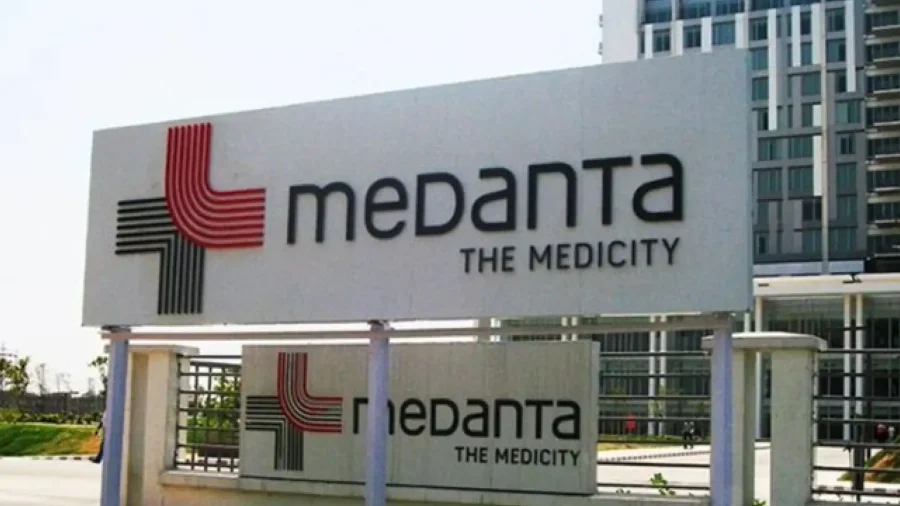

Global Health Limited, the company behind the Medanta hospital chain, has bought a land parcel in Ghaziabad for about Rs 165.82 crore. The plan on that land is a hospital of more than 350 beds. On paper, it is a real-estate transaction. In effect, it is a bet that Ghaziabad, eastern Delhi and Meerut will stop exporting their serious cases — and start treating them locally. By [Author Name] | Healthcare & Corporate Desk
The Deal: Land Bought, Beds Promised
The acquisition is the first concrete step in what Global Health describes as an expansion of its hospital network. The company operates hospitals across several Indian cities and has been adding capacity to its existing footprint.
The Ghaziabad project is intended to serve the district and surrounding regions, with eastern Delhi and Meerut named among the catchments. Those three geographies together form one of the densest patient pools in the National Capital Region.
Why Ghaziabad Was the Logical Next Address
Ghaziabad is a large, built-up urban district with a rapidly growing residential belt — Indirapuram, Vasundhara, Vaishali and the Crossings Republik corridor among them. For years, many of these households have defaulted to Gurugram, south Delhi or central Delhi for anything beyond routine care.
A 350-plus bed hospital changes that calculation only if it offers the specialities people currently travel for — cardiac sciences, oncology, neurosciences, transplants and high-end critical care. The bed count is the promise. The speciality mix is what will decide whether patients actually switch.
How Global Health Grew — and Why It Keeps Adding Beds
Global Health's identity in the Indian market is tied to the Medanta brand, which it operates. The company's stated strategy has been network expansion: deeper presence in existing cities, and new geographies where demand is growing faster than supply.
Land is the cheapest and most reversible part of that strategy. Buying early, before construction costs and civic approvals are locked in, gives a hospital operator control over site size, frontage and future expansion — options that are far harder to buy later in a built-up corridor like Ghaziabad.
Who Actually Feels This — Patients in Three Catchments
The clearest beneficiaries, if the project is completed, are families in Ghaziabad who currently lose hours to travel for a specialist consultation, an angiography or a chemotherapy cycle. Travel time in an emergency is not an inconvenience; it is a clinical variable.
Eastern Delhi and Meerut matter for a different reason. Meerut sits on the Delhi–Dehradun and Delhi–Haridwar corridors, and patients from that belt frequently migrate toward Delhi for tertiary care. A large hospital on the Ghaziabad–Meerut axis would sit directly in that flow.
What the Company Has Said — and What It Hasn't
The transaction details available at the time of writing cover land, value and intended bed capacity. They do not include a construction start date, a commissioning target, the total project cost beyond the land, or the speciality configuration.
That gap is normal at the land stage but material for readers. Until Global Health publishes or confirms a schedule, any announced opening year should be treated as unverified.
Land First, Patients Later: Reading the Sequence
Hospital projects in India typically move through a long chain: land acquisition, change-of-land-use and building approvals, environmental and civic clearances, design, construction, equipment procurement, statutory licensing, and finally clinical hiring and commissioning.
Each stage can take months, and each can slip. A land purchase is therefore best read as a signal of intent and a claim on a location — not as evidence that beds will be available soon.
What's Confirmed, and What's Still Open
Confirmed: Global Health Limited has acquired land in Ghaziabad for approximately Rs 165.82 crore. The intended project is a hospital of more than 350 beds. The stated service area includes Ghaziabad, eastern Delhi and Meerut.
Not confirmed: the exact location within Ghaziabad, the total investment, the specialities planned, the construction timeline, the expected opening, and the staffing model. None of these were part of the information available. Anything beyond the confirmed list should be labelled as speculation.
The Medanta Moat: Why the Brand Travels Well
For a non-expert reader, the simplest way to understand why this deal matters is this: hospital chains do not compete only on beds. They compete on trust, referral networks and the reputation of specific doctors and programmes.
Global Health's advantage is that the Medanta name is already recognised by patients well outside the cities where its hospitals sit. That recognition reduces the marketing cost of a new facility and shortens the time it takes to fill beds — a genuine edge in a capital-heavy business.
The Risks: Beds Are Easy to Announce, Hard to Staff
The biggest risk is not land or money. It is people. Large hospitals in the NCR compete for the same pool of senior consultants, intensivists, nurses and technicians, and a new 350-bed facility will have to recruit at scale before it earns revenue.
Then there is demand risk. Ghaziabad's patient base is more price-sensitive than south Delhi's, and several large private chains already operate across the NCR. If the new hospital leans too far upmarket, it may find that its natural catchment still prefers the familiar addresses — a problem no land purchase can solve on its own.
A Pattern, Not a One-Off: Private Care Is Moving Outward
This deal fits a wider shift. Large private hospitals have been pushing out of saturated central-city locations into peripheral NCR towns and tier-two cities, where land is cheaper, congestion is lower and insurance penetration is rising.
For patients, that trend is broadly positive: shorter travel, more choice and, in theory, more competition on price. For the operators, it is a race to secure the best remaining plots before the next entrant does.
If You're a Patient, Investor or Resident: What to Watch
Patients in Ghaziabad and eastern Delhi should treat this as a multi-year development, not an immediate option. Watch for the speciality list when it is published — that, not the bed count, determines whether the hospital is useful to you.
Residents near the site should expect traffic and infrastructure questions to follow once construction begins. Investors tracking Global Health should look for disclosures on project cost, funding route and phasing before treating the land deal as a financial event.
What Could Happen Next
The most likely near-term steps are civic and regulatory filings, appointment of design and construction partners, and phased capital spending. Any of these, when disclosed, would give the first reliable picture of the project's schedule.
Until then, the honest read is that this is a well-located option being taken up by an operator with the brand strength to use it. Whether it becomes a working hospital with 350 beds — and when — remains open.
Our Take
Land purchases are the least glamorous and most revealing moves in healthcare. They show where an operator believes patients will be in ten years, not where they are today. Global Health has placed its marker on the Ghaziabad–Meerut axis.
The deal is credible and the strategy is coherent. But the story that will actually matter — affordable speciality care arriving for a catchment that has long commuted for it — cannot be written from a land registry entry. It will be written from the first out-patient queue, whenever that forms.
Frequently Asked Questions
What has Global Health bought in Ghaziabad?
Global Health Limited, which operates the Medanta hospital chain, has acquired a land parcel in Ghaziabad for approximately Rs 165.82 crore, with plans to build a hospital on the site.
How many beds will the new Ghaziabad hospital have?
The planned hospital is described as having more than 350 beds. The speciality mix and phased bed rollout have not been disclosed in the information available.
Which areas will the hospital serve?
The stated service area covers Ghaziabad and nearby regions, including eastern Delhi and Meerut — a catchment that currently sends a significant share of its tertiary-care patients into central and south Delhi.
When will the hospital open?
No opening date has been confirmed. The project is at the land-acquisition stage, and hospital construction, licensing and staffing typically take several years. Any specific timeline circulating without a company disclosure should be treated as unverified.