
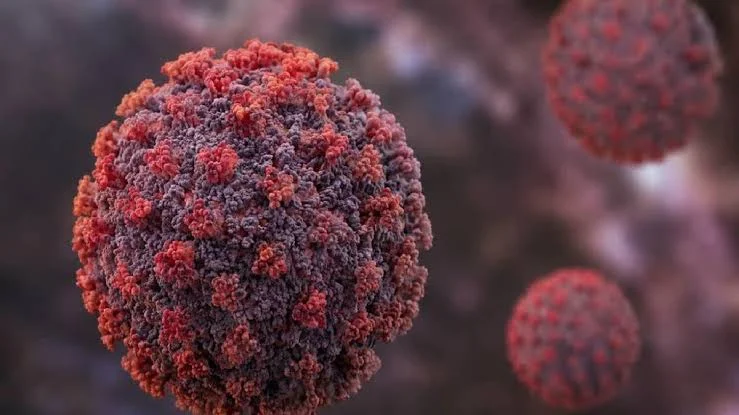

An infection that clears in a week can leave a mark that lasts for decades. That is the unsettling possibility described in new work by researchers at the CSIR-Centre for Cellular and Molecular Biology (CCMB), Hyderabad, who have outlined a possible route from viral infection to Parkinson's disease.
At the centre of it are amyloids — clumped proteins that, according to the researchers, hamper the transmission of information across neurons, leaving brain function impaired. Their study suggests a viral infection could be the event that sets that process moving.
The claim is not that a virus causes Parkinson's. It is that infection may be one way the disease begins — a distinction that matters enormously for patients, families and the scientists now hunting for earlier warning signs.
What the CCMB team actually described
Stripped to its essentials, the finding is about communication failure inside the brain. Amyloids disrupt the relay of signals from one neuron to the next, and that interruption shows up as impaired functioning.
What the study adds is a suspected entry point: a viral infection that may trigger or accelerate the amyloid build-up in the first place. CCMB's researchers present this as a pathway worth investigating, not a settled causal chain.
That nuance is the whole story. In brain disease research, the difference between "may pave the way" and "causes" is usually the difference between a decade of follow-up studies and a headline.
Why Parkinson's is so hard to catch early
Parkinson's is a progressive disorder that affects movement, and it is typically diagnosed on symptoms — tremor, stiffness, slowness — not on a single lab test. By the time those symptoms become obvious, damage to brain cells has often been underway for years.
That lag is precisely why a possible infection link interests researchers. An infection is a datable event. If it leaves a detectable trail, it could offer something Parkinson's research has long lacked: a starting point.
Amyloids are familiar territory. The infection angle is newer
Protein clumping is an old character in neurodegeneration research. In Parkinson's, the protein alpha-synuclein is known to aggregate into abnormal deposits inside brain cells — the same broad family of behaviour the CCMB team is describing here.
What has shifted in recent years is the willingness to look outside the brain for triggers, including infections and immune responses. The CCMB finding sits inside that shift rather than creating it.
Who this eventually matters to
For most readers, this is not immediately actionable. It does not change how Parkinson's is diagnosed today, and it does not change treatment. No one should read a past bout of fever or flu as a prediction.
It matters on a longer horizon. For families watching a parent's handwriting shrink or a spouse's gait change, research into early triggers is the difference between managing a disease after it arrives and one day interrupting it before it does.
It also matters for India, where an ageing population is steadily enlarging the pool of people who will need neurological care.
What the institution has said — and what it hasn't
CCMB has described the amyloid mechanism and its effect on neuronal communication. Beyond that, the source material carries no direct quotes, no named researchers, no journal citation and no peer-review status.
That absence is not an accusation. It simply means readers should treat this as laboratory-level science reported at an early stage, and not as a clinical breakthrough. Confirmation, if it comes, will arrive through replication by other groups.
Confirmed facts versus what remains unclear
Confirmed: CCMB in Hyderabad has described a pathway in which amyloids impede signalling between neurons and impair functioning, in the context of how viral infection may pave the way for Parkinson's disease.
Unclear: which viruses are involved, how long the gap between infection and symptom onset might be, whether the mechanism has been demonstrated in human patients or only in experimental models, and whether the work has been peer-reviewed. Everything beyond the described mechanism is speculation at this point.
Why a viral trigger is so difficult to prove
Common viruses infect enormous numbers of people. Parkinson's affects a small fraction. Any link must therefore explain why the same infection produces disease in one person and nothing in another — genetics, age, immunity and environment are all plausible co-conspirators.
There is also the timing problem. If a trigger occurs twenty or thirty years before diagnosis, retrospective studies struggle to reconstruct it reliably. This is why infection hypotheses in neurology tend to advance slowly and generate more questions than conclusions.
The wider pattern this fits into
The idea that infections can leave a permanent neurological footprint is not new. The encephalitis lethargica outbreak associated with the 1918 influenza pandemic left some survivors with parkinsonism-like symptoms, an observation generations of neurologists have cited.
Modern research has widened the lens further, examining inflammation, immune responses and even the gut-brain connection. The CCMB work belongs to that broader effort to understand neurodegeneration as something that may begin long before the first visible symptom.
What patients, caregivers and students should take from this
If you or a family member has been diagnosed with Parkinson's, nothing here changes your treatment plan. Nothing in this finding suggests a past viral illness is the reason for a diagnosis, and it should not be read that way.
For anyone noticing persistent tremor, stiffness, slowed movement or changes in balance or handwriting, the sensible step remains a consultation with a neurologist — promptly, and with symptoms documented over time.
For students and early-career researchers in cell and molecular biology, this is a useful illustration of how mechanism-level work is reported: carefully, with the causal claim left deliberately open.
What could come next
The natural next steps for this line of research would be independent replication, work in human-relevant models, and studies that follow people over long periods after infection to see who develops neurological symptoms and who does not.
Until such evidence accumulates, the finding sits where most good science sits in its early phase — plausible, mechanistic, and unproven.
Our Take
The real value of this CCMB study may not be the answer it offers, but the question it sharpens. Parkinson's has long been diagnosed late because its earliest stages are invisible. If a viral infection can indeed seed the amyloid clumping that disrupts neuronal communication, then the disease's timeline may be far longer — and far more traceable — than symptoms suggest.
That is a hypothesis, not a conclusion, and it deserves to be reported as one. But it is the kind of hypothesis that quietly redirects a field: away from treating Parkinson's as a disease of old age, and toward understanding it as a process that may begin decades earlier, possibly triggered by something as ordinary as an infection.
Frequently Asked Questions
Does this study mean a viral infection causes Parkinson's disease?
No. The CCMB researchers describe a possible pathway in which viral infection may pave the way for Parkinson's disease, not proof that infection causes it. Many people who contract viral infections never develop Parkinson's, and the mechanism still needs independent confirmation.
What are amyloids, and what do they do here?
Amyloids are proteins that misfold and clump together. According to the CCMB study, these clumps hamper the transmission of information across neurons, which leads to impaired functioning. In Parkinson's research, the related protein alpha-synuclein is already known to form abnormal deposits in brain cells.
Should someone who had a viral illness worry about Parkinson's later?
There is no reason to panic on the basis of this finding. Viral infections are extremely common, while Parkinson's is not, and no screening or preventive step follows from this research. Persistent movement symptoms should be evaluated by a neurologist regardless of infection history.
What is CSIR-CCMB?
The Centre for Cellular and Molecular Biology is a Hyderabad-based research institute under the Council of Scientific and Industrial Research (CSIR), India's largest public research and development organisation. Its work spans cell biology, genetics, and molecular mechanisms of disease.