

By [Author Name] | Health & Technology Correspondent
Thirty-nine hospitals in Delhi NCR now have robotic surgical systems. Eleven of them have more than one. That single detail — not the total, but the duplication — tells you something has changed in Indian operating theatres.
Hospitals do not buy a second surgical robot because it looks impressive. They buy it because the first one is booked. According to data presented at a medical conference, that is exactly where Delhi NCR stands today: the country's leading hub for robotic-system installations.
39 Hospitals, One Region: How Delhi NCR Pulled Ahead
The headline number is 39 hospitals with robotic systems. The more revealing figure is 11 — the hospitals that have invested in more than one unit.
Multiple systems in the same hospital usually indicate sustained case volumes, not a pilot project. It suggests the technology has crossed the line from a marketing asset into a functioning part of the surgical schedule.
No other Indian region was cited at the same scale in the conference data.
Why a Console and Four Arms Matter to a Patient on the Table
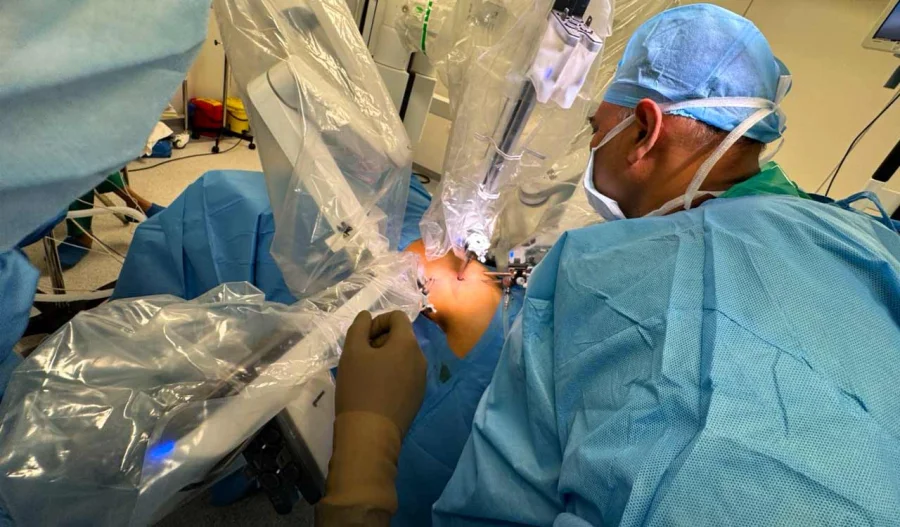
Robotic surgery does not mean a machine operates on its own. The surgeon sits at a console nearby, viewing a magnified 3D image, and controls mechanical arms that hold and move instruments inside the patient.
The pitch is precision: smaller incisions, steadier movement, better visibility in tight spaces. In practice, that can translate to less blood loss, shorter hospital stays and faster recovery for some procedures — though not automatically for every surgery, and not for every patient.
That distinction matters. Robotic surgery is a tool in a surgeon's hands, not a replacement for surgical judgement.
From Novelty to Routine: How the Technology Found Indian Operating Theatres
For years, robotic systems in India were confined to a handful of large corporate hospital chains in metros, often used to signal technological leadership as much as clinical capability.
The shift visible in the conference data is one of spread rather than invention. The technology itself is not new. What is new is the density — several systems, several hospitals, one region.
Delhi NCR's advantage is structural. It has a dense concentration of large private hospitals, high patient volumes, medical tourism traffic and a deep pool of specialists who can be trained on the platform.
Why Cost, Not Technology, Decides Who Gets Robotic Surgery
A robotic system is a capital purchase, and each procedure adds a consumables cost on top of that. Those costs typically flow into the patient's bill.
That is why robotic surgery in India is still largely a private-hospital, paying-patient proposition. Insurance coverage and reimbursement policies often determine whether a patient can even consider it.
Until that economics changes, the technology will follow purchasing power — and purchasing power is concentrated in metros.
Who Actually Benefits — and Who Is Still Left Out
The patient who benefits most today is typically someone in a metro city, with access to a large private hospital, undergoing a procedure where robot-assisted approaches have documented advantages.
The patient left out is just as real: someone in a smaller town whose nearest hospital has no system, no trained surgeon, or no pathway to afford the procedure.
India's surgical capacity has always been geographically uneven. Robotic surgery, so far, is widening that gap rather than closing it.
What Experts Are Saying — and What They Are Not Saying
Experts presenting the data framed Delhi NCR as the country's leading hub for robotic-system installations, with the 39-hospital and 11-hospital figures as the evidence.
Notably, the data speaks to installations, not outcomes. There was no claim at this stage that Delhi NCR patients have better surgical results than patients elsewhere.
That is an important limit. Counting machines is not the same as measuring quality, and the two should never be conflated in public discussion.
Why Hospital Chains Are Buying Robots Faster Than They Can Train Surgeons
A robotic system is only as good as the surgeon operating it. Training takes time, proctored cases and volume — and volume requires referrals.
Hospitals that buy a system before building a trained team risk underuse, which is precisely why the 11 multi-system hospitals stand out: they have evidently solved the pipeline problem.
For hospital groups, this also functions as a competitive moat. Robotic capability attracts senior surgeons, complex cases and medical tourism, which in turn funds the next machine. It is a self-reinforcing loop — and one that favours large, well-capitalised players.
Confirmed Facts vs What Remains Unclear
Confirmed: Delhi NCR has 39 hospitals with robotic surgical systems; 11 have more than one; the region leads India in installations, per conference data.
Unclear: how many robotic procedures are performed annually in NCR, how outcomes compare with conventional surgery, how many systems are underutilised, and whether public hospitals are part of the count.
Anything beyond the conference figures — market size, growth rates, procedure volumes — would be speculation at this point. Treat such numbers with caution until verified.
Risks and the Balanced View
Questions that legitimately surround robotic surgery adoption include cost-effectiveness for routine procedures, the learning curve for surgeons in training, and the risk of the technology being marketed beyond the strength of its evidence for specific operations.
Supporters point to precision, recovery times and surgeon ergonomics. Sceptics point to price, unclear benefit in some surgeries and the pressure hospitals feel to acquire systems to stay competitive.
Both positions have merit. The honest answer is that robotic surgery is clearly better for some procedures, clearly unnecessary for others, and still being studied for many in between.
A Wider Pattern: Metro Medicine, Tier-2 Ambition
Delhi NCR's lead fits a broader pattern in Indian healthcare, where advanced technology arrives first in the biggest cities, matures there, and only later moves outward.
What usually drives the second wave is not ambition but economics — falling equipment prices, rising competition between hospital chains, and insurers slowly expanding coverage.
If that pattern holds, the next set of installation data will tell us whether robotic surgery is genuinely spreading or simply deepening in the same few postcodes.
What This Means If You or a Family Member Needs Surgery
If robotic surgery is offered to you, ask three questions: Does this procedure have proven advantages with a robotic approach? How many of these has my surgeon personally performed? And what will it cost me beyond what insurance covers?
Do not assume "robotic" automatically means better care. In some cases it does. In others, a conventional or laparoscopic approach may be equally effective and significantly cheaper.
A second opinion remains the cheapest and most reliable safeguard available to any patient.
What Happens Next
The immediate next indicator will be whether hospital groups outside NCR announce similar installations, and whether public and trust hospitals enter the picture.
Training capacity is the other variable. Without a steady supply of trained surgeons, more machines will simply mean more idle machines.
Watch for two things: any official registry of robotic procedures, and whether reimbursement frameworks catch up with the technology.
Our Take
The story here is not that robots have arrived in Indian surgery — they arrived years ago. It is that Delhi NCR now has enough of them, in enough hospitals, to suggest the technology has become institutional rather than experimental.
That is real progress worth reporting. It is also worth tempering: installation counts measure purchasing capacity, not patient outcomes, and India's surgical inequality will not be solved by robots concentrated in the country's wealthiest medical corridor.
The numbers are a milestone. What they mean for the average Indian patient is still an open question.
Frequently Asked Questions
How many hospitals in Delhi NCR have robotic surgical systems?
According to data presented at a medical conference, 39 hospitals in Delhi NCR have robotic systems, and 11 of these hospitals operate more than one system. That makes the region India's leading hub for robotic-system installations.
Does robotic surgery mean a robot performs the operation?
No. The surgeon remains fully in control, seated at a console and guiding mechanical arms that hold surgical instruments. The system translates the surgeon's hand movements with added precision and stability.
Is robotic surgery better than conventional surgery?
It depends on the procedure. Robot-assisted approaches have documented advantages in certain urological, gynaecological, oncological and general surgeries, typically including smaller incisions and faster recovery. For many other procedures, conventional or laparoscopic surgery can be equally effective and less expensive.
Why is Delhi NCR leading in robotic surgery installations?
The region has a high concentration of large private hospitals, heavy patient volumes, medical tourism traffic and a strong specialist talent pool — the three conditions that make a hospital's investment in robotic systems viable.
Is robotic surgery covered by health insurance in India?
Coverage varies by policy and insurer, and patients are usually advised to confirm reimbursement in writing before scheduling a procedure. Cost remains one of the main reasons robotic surgery is still concentrated among paying patients in private hospitals.