
By [Author Name] | Technology & Startups Desk
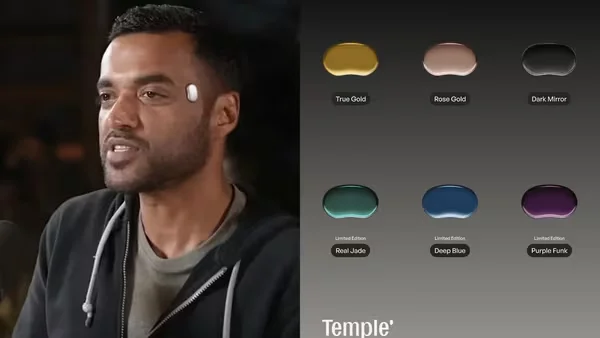
Deepinder Goyal's most ambitious bet is starting to look like a product rather than a project. The entrepreneur behind Zomato has teased six colour options for Temple, the brain-health wearable his team has been developing for months — and pre-orders could open as early as next week.
The detail sounds cosmetic. It usually isn't. Colourways tend to be locked only after a device's design is frozen, its supply chain is lined up and a launch window is close enough to build a campaign around. For a category as young as consumer brain-health tech, that is a meaningful step from research to retail.
Six Colourways and One Clear Signal
Hardware companies rarely talk about colours first. They talk about what a device can do. When the palette becomes the headline, it generally means the engineering conversation is largely settled and the marketing conversation has begun.
Read that way, the six-colour tease is less about aesthetics and more about readiness — a soft, low-cost way to test public appetite before committing to a price and a ship date.
What Temple Is — and What It Is Not Yet
Temple has been described as a wearable built around brain-related health metrics, developed over months rather than weeks. That places it in a technically unforgiving space: consumer devices that make health claims invite scrutiny from regulators, clinicians and buyers alike.
What it is not, at least publicly, is a fully specified product. No confirmed pricing, battery life, sensor list, subscription model or launch geography has surfaced in the material reviewed. Until those exist, Temple remains a pre-launch device with a design story.
The Pre-Order Question: A Possibility, Not a Promise
The suggestion that pre-orders may open next week is exactly that — a possibility. In hardware, pre-order windows slip routinely when certification, component supply or software testing runs late.
For readers, the distinction matters. A colour teaser carries almost no commercial risk for a founder. A live pre-order page, with a payment gateway and a delivery promise, carries a great deal.
Who Is Actually Affected by This Update
Three groups are watching closely. Early adopters in India's premium gadget market, who have been waiting for a credible homegrown health wearable. Clinicians and researchers, who will want to see independent validation before treating any brain-metric output as meaningful. And rival device makers — Apple, Samsung, Whoop, Oura and a cluster of neurotech startups — who will read the timing as competitive intelligence.
For everyone else, the practical impact today is close to zero. Nothing is on sale, and nothing has been benchmarked.
What Goyal Has Confirmed — and Held Back
Goyal has built a reputation for launching in public, teasing early and iterating fast, a playbook Zomato used to define India's food-delivery era. That style cuts both ways: it generates enormous free attention, and it sets expectations that a hardware product must eventually meet.
Notably absent from this update are the details that decide whether a wearable succeeds — accuracy, comfort over long wear, battery, price and data policy. Their absence is normal at this stage. It is also the part that will be judged hardest.
Confirmed vs Unconfirmed: Reading This Honestly
Confirmed: six colour options have been teased for Temple, and the product has been in development for months around brain-related health tracking. Unconfirmed: the pre-order date, the price, the specifications and any regulatory clearance.
Anything beyond that — launch markets, partnerships, subscription pricing — should be treated as speculation until Temple or Goyal states it directly.
The Moat Question: Why Temple Could Be Hard to Copy
Wearables are easy to assemble and hard to defend. The durable advantages are rarely the hardware. They are the algorithm trained on real, longitudinal data; the clinical credibility that comes with published validation; the brand of the founder behind it; and the ecosystem that keeps users returning after the novelty fades.
Goyal's distribution instincts and ability to command attention are genuine assets. Whether they convert into a defensible dataset in brain health is the open question — and it will take years, not weeks, to answer.
Risks and the Balanced View
The biggest risk is overclaiming. Health technology sits under close regulatory watch, and a wearable that implies diagnostic capability without evidence invites both regulatory action and consumer backlash. India's device rules and overseas regimes are not forgiving on this point.
Then there is the data. Brain and cognitive signals are among the most sensitive categories of personal information a company can hold. Privacy safeguards will matter as much as sensor accuracy.
Finally, execution: hardware margins are thin, returns are costly, and founder-led hype can outrun a supply chain. Supporters see a bold Indian bet on a genuinely new category. Sceptics see a crowded field where most products quietly stall after launch. Both views are defensible right now.
The Wider Pattern: Founders Are Betting on Brain Health
Temple is not arriving in a vacuum. Global tech majors and a wave of startups have spent years pushing consumer neurotech — from focus tracking to sleep and stress monitoring — toward the mainstream. Most have struggled to move beyond a niche of enthusiasts.
What would change that is evidence: peer-reviewed accuracy, clear use cases and a price that makes sense for a general buyer. A colour range does not answer any of those questions, but it does suggest someone believes the answers are close.
If You're Thinking of Pre-Ordering
Wait for three things before paying: the full specification sheet, an independent accuracy assessment, and the data-handling policy in plain language. Also check the cancellation and return terms — pre-order refunds are not uniform across hardware makers.
If you are an investor in listed companies, note that news flow around a founder's private venture can move sentiment without changing fundamentals. Treat the two separately.
What Happens Next
The next verifiable milestones are a live pre-order page, published specifications and any regulatory disclosure. If pre-orders do open next week, expect the conversation to shift quickly from colours to capability.
If they don't, the teaser still stands — but the gap between a design reveal and a shipping product will start to show.
Our Take
This is a small update with a larger meaning. A colour palette is not innovation, and it should not be reported as if it were. But it is a legitimate signal that Temple has moved past the whiteboard stage — and that a launch is being planned, not merely imagined.
The real test comes later, when the device has to justify its price against entrenched rivals and its health claims against evidence. Until then, the honest position is interest without endorsement.
Frequently Asked Questions
What is Temple, the wearable by Deepinder Goyal?
Temple is a wearable device developed around tracking brain-related health metrics. It has been under development for months and is now being teased ahead of a possible commercial launch.
When will Temple pre-orders open?
Pre-orders may open next week, according to the original report. That timing has not been officially confirmed, and hardware launch windows frequently shift.
How many colours will Temple come in?
Six colour options have been teased so far. It is not yet clear whether all six will be available in every market or at launch.
Should you pre-order Temple without knowing the price?
No. Pre-ordering before pricing, specifications and data policies are published is a risk. Waiting for independent accuracy validation is the more sensible route for a health-related device.